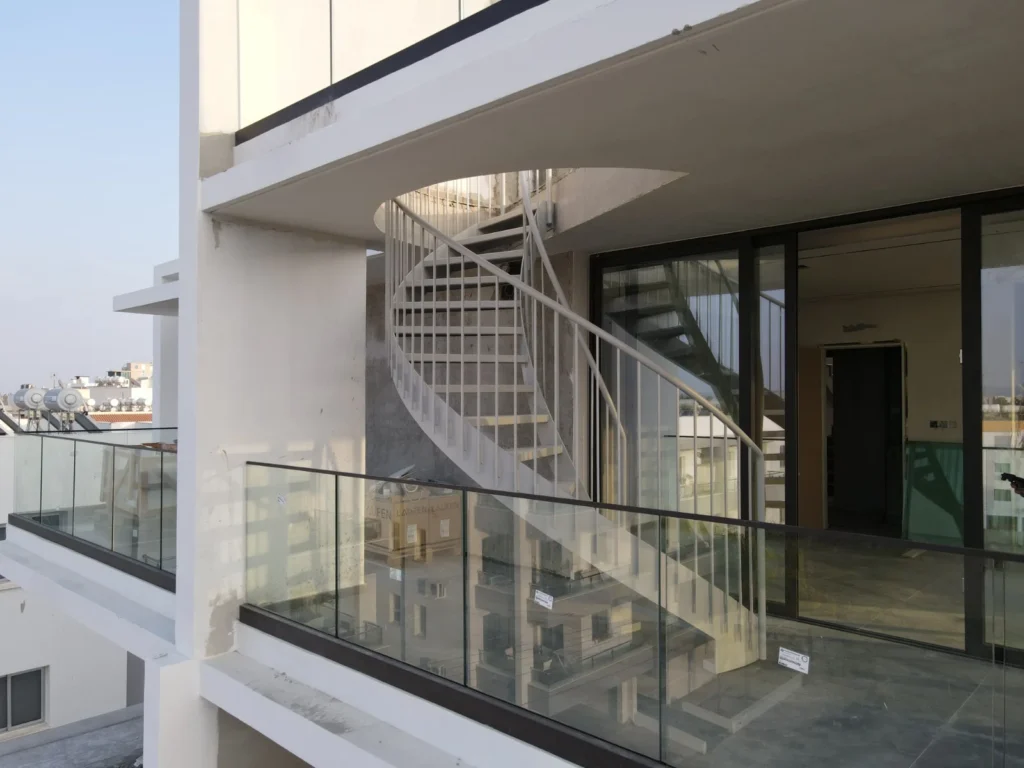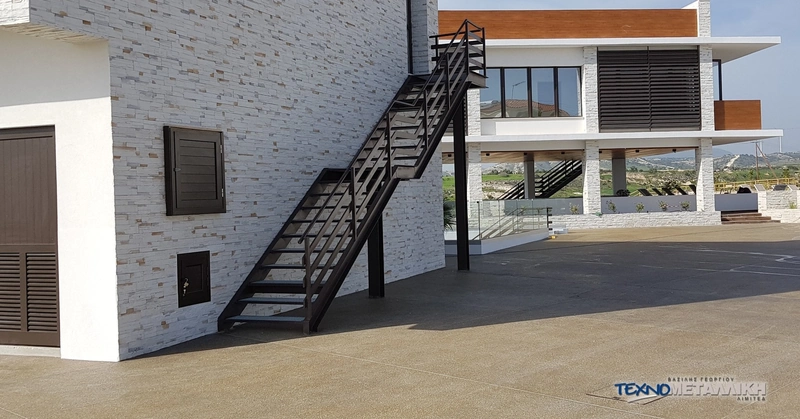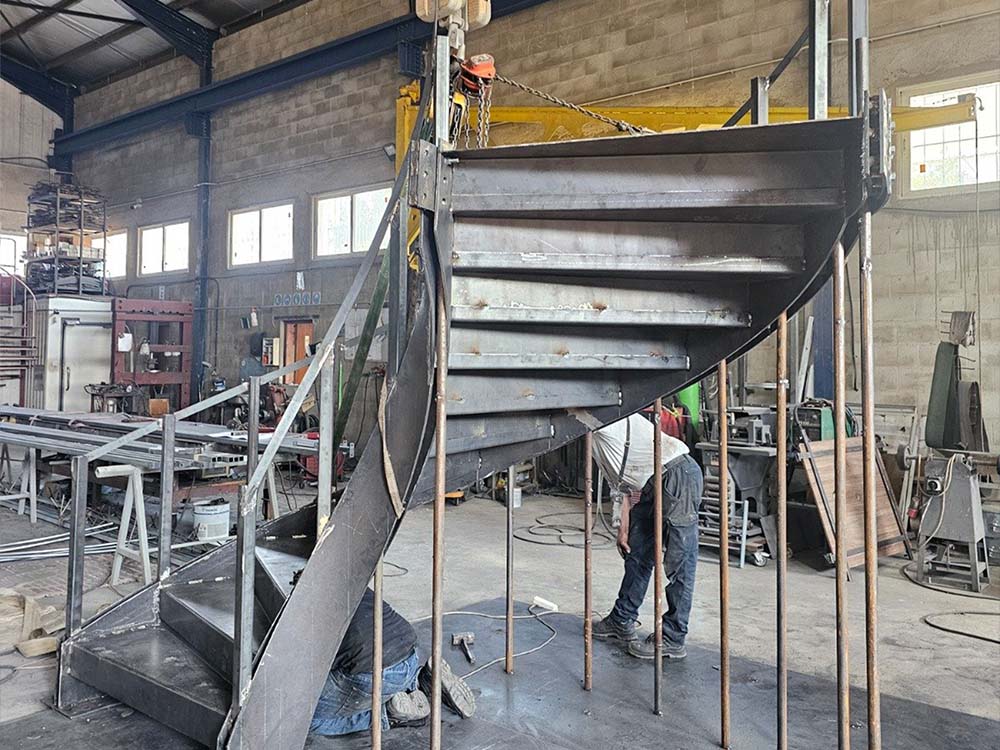
A staircase outside a coastal home in Limassol or Paphos gets exposed to more than sunshine. There’s salt in the air, moisture on the steel during cooler mornings and occasional heavy rain. Over time, these conditions can affect the staircase, particularly around its connections.
So, if you’re ordering a new metal staircase, should you go for welded or bolted construction?
The answer depends on your property’s location, the staircase design and how the steel will be protected from corrosion. Both connection methods have their place, although one may be more practical for your installation.
Welded vs Bolted Staircases and How They Differ
Welded staircases have steel components permanently joined using heat. The connections can be finished to create a smooth appearance, with fewer visible plates and fasteners.
Bolted staircases use bolts and connecting plates to secure different sections. These components are generally manufactured separately and assembled at the property.
Here’s what changes when you’re comparing the two.
| Feature | Welded connections | Bolted connections |
| Appearance | Smooth, less visible joints | Bolts and connection plates may be visible |
| Installation | Larger prefabricated sections or on-site welding | Smaller sections assembled on-site |
| Future changes | Cutting and additional fabrication may be needed | Some connections can be dismantled |
| Maintenance | Inspect welds and protective coatings | Inspect bolts, plates and protective coatings |
| Coastal concerns | Coating damage around welds | Moisture collecting around fasteners and overlapping plates |
Many metal staircases combine these methods. Individual sections may be welded in a workshop, then connected with bolts during installation.
So, the real decision often concerns where each connection should be made.
How Coastal Conditions Influence the Connection Method
Salt carried by sea air can accelerate corrosion on exposed steel, especially where moisture collects or protective coatings have been damaged.
For welded staircases, attention usually falls on the weld finish and any areas where heat has affected the coating.
Bolted connections require closer inspection around fasteners, washers and overlapping steel surfaces.
A property close to the shoreline may also experience stronger salt exposure than one several kilometres inland.
However, choosing between welded and bolted construction doesn’t settle the entire corrosion question.
The type of steel, protective coatings and drainage also play a part in how well a staircase withstands coastal conditions. These factors deserve separate attention, which is why we’ve covered them in more detail in our article on protecting outdoor staircases from coastal weather.
Here, the focus is on how the connections affect fabrication, installation, and future maintenance.
When Should You Consider Welded Staircase Construction?
Welded construction is worth considering when your staircase design allows most fabrication to be completed in a workshop.
For example, a straight staircase connecting a garden to an upper-level terrace may be manufactured in larger welded sections, provided there’s enough access to transport and position them.
This approach can produce a clean appearance, particularly where exposed connection plates would interfere with the design.
Another consideration is corrosion protection.
Welding should ideally be coordinated with the proposed finishing process. If hot-dip galvanising is specified, completing suitable workshop welds before galvanising can avoid damaging the zinc coating during installation.
Welding galvanised steel on-site removes protection around the heated area. The affected surfaces then require an appropriate repair treatment.
What should you ask the fabricator?
Find out which connections will be welded before protective treatment and if any welding will be necessary at your property.
Also check how those welds will be finished, particularly around exposed corners where water could collect.
When Does Bolted Construction Make More Sense?
Imagine adding an outdoor staircase to an existing coastal home with a narrow driveway and limited access around the building.
Transporting a complete welded staircase could be difficult.
Bolted construction allows the main sections to arrive separately and be assembled in position. This may reduce the need for large lifting equipment, depending on the staircase dimensions and site access.
It’s a practical consideration for staircase installations in Cyprus during renovation projects.
Bolted construction can also reduce on-site welding, allowing protective finishes to be applied to individual components beforehand.
Still, consider what happens several years after installation.
Bolts and connection plates remain exposed to the coastal environment. Their materials and coatings need to be compatible with the staircase structure, and the connections should remain accessible for inspection.
If a component eventually requires replacement, a suitably designed bolted connection may make removal easier.
Which Option Works Better for Your Coastal Home?
There’s no universal winner. Your property’s layout and the proposed fabrication method should guide the choice.
Consider welded construction if:
- You want fewer visible mechanical connections.
- The staircase can be transported in larger sections.
- Workshop welding can be completed before protective finishing.
- The design doesn’t require frequent dismantling.
Consider bolted construction if:
- Your property has restricted delivery or installation access.
- The staircase needs to be assembled from smaller sections.
- You want to minimise welding at the installation site.
- Easier removal of certain components is useful for future maintenance.
A combination of both methods may also be suitable.
For instance, welded workshop sections joined with bolts on-site can offer a practical balance between fabrication and installation requirements.
The structural design still needs to account for expected loads, connection strength and safe access, regardless of the assembly method.
Will Welded or Bolted Construction Affect the Price?
Yes, although the difference depends on the staircase design.
A welded staircase may involve more workshop fabrication, finishing and transport planning. If large sections require lifting equipment during installation, that can influence the overall quotation.
Bolted staircases involve connection plates, fasteners and additional assembly work. More complicated joint arrangements may increase fabrication time.
There’s also the cost of protective treatment.
A quotation that includes galvanising, suitable fasteners and necessary coating repairs may look different from one that covers only the fabricated steel structure.
For homeowners comparing quotes for staircases in Cyprus, request a clear breakdown of fabrication, corrosion protection, delivery and installation.
Pay particular attention to anything described as additional on-site work. That’s where unexpected costs can arise.
What Should You Confirm Before Ordering?
Before approving the staircase design, discuss the proposed connection arrangement with the fabricator.
Ask which sections will be welded, where bolts will be used and how the completed structure will reach the installation area.
Check the proposed corrosion protection for both the steel structure and its connections.
If the property is particularly close to the sea, make sure the supplier understands the exposure conditions.
A site assessment can also flag access restrictions, structural support needs and likely installation problems before fabrication starts.
Frequently Asked Questions
Are welded staircases stronger than bolted staircases?
Not by default. A well-designed bolted joint and a well-made weld can both carry the load. What decides the strength is the joint design, the steel grade, the loads the staircase has to take and the standard of the installation.
Do bolted staircases rust faster near the sea?
Not necessarily. Rust usually starts where moisture gets trapped, such as around unprotected bolts and connection plates. Corrosion-resistant fasteners, a good coating and drainage that lets water escape all lower that risk.
Is galvanising recommended for outdoor staircases in Cyprus?
Hot-dip galvanising is a common choice for outdoor steel because it protects well against corrosion. A property close to the coast, with a lot of salt in the air, may need an extra coating on top of the galvanising. The right system depends on the site and on how long the staircase needs to last.
Can welded and bolted connections be used together?
Yes. Many staircases are welded in the workshop and bolted together on site. This works well when a complete staircase would be hard to transport, or when access to the site is limited.
Planning a Metal Staircase for Your Coastal Property?
Not sure whether welded or bolted construction suits your project? It comes down to your staircase design, the space available for installation, and how exposed the property is to the coast. Contact our team to talk through your requirements and get a quote for a metal staircase built for your property in Cyprus.