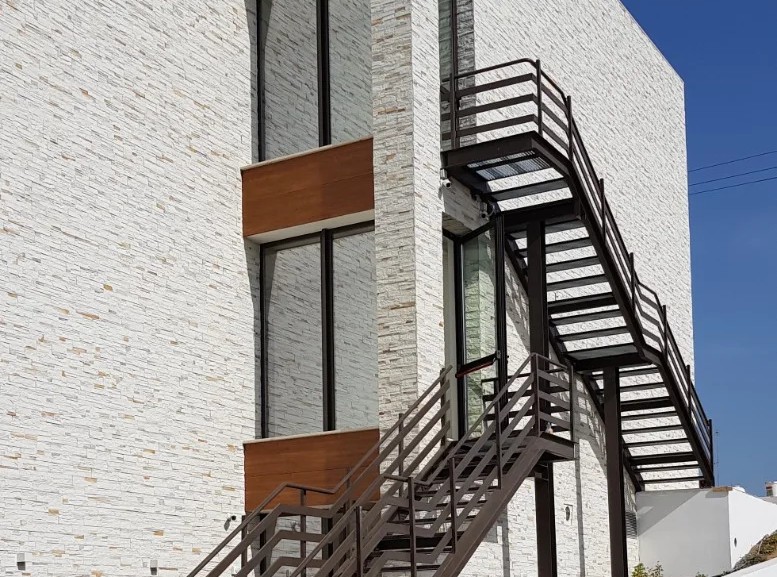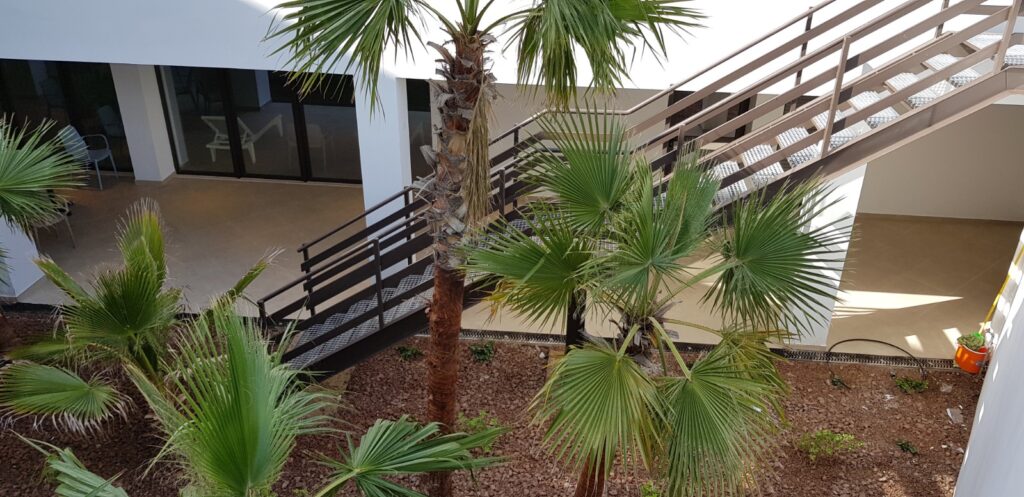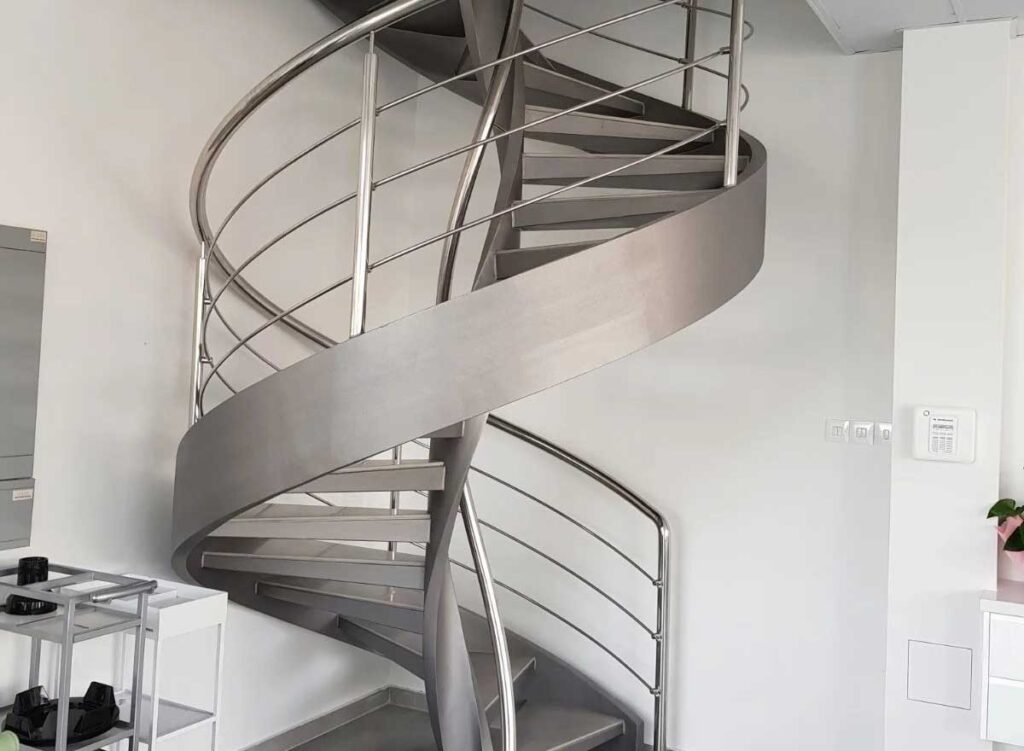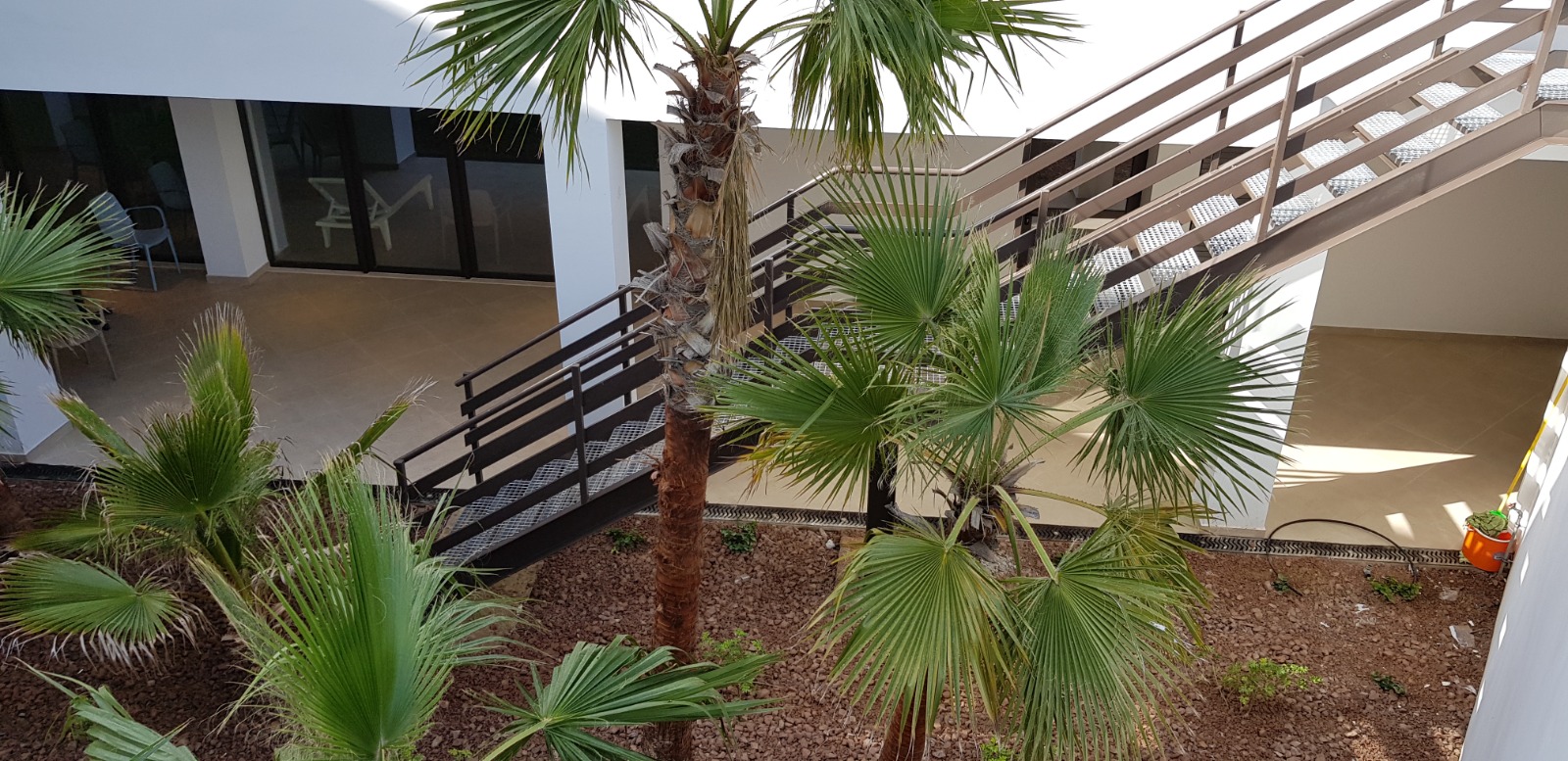
A fire-escape stair in a commercial building is not a background feature. It is part of the route people rely on when the building has to be cleared quickly and safely. In Cyprus, that makes fire-escape stairs more than a fabrication job. They sit inside the building-permit system, the fire-protection review process and the structural rules used for modern construction. Local licensing guidance confirms that building permits are governed by the Streets and Buildings Regulation Law and related regulations, and that applications now move through the IPPODAMOS electronic system.
Start with the approval route, not the steel
One of the easiest mistakes is to think about the stair too late. In practice, the approval path starts well before fabrication drawings. Cyprus Fire Service materials point directly to Fire Prevention responsibilities, rules and regulations, and building-permit consulting. Local licensing pages in Limassol also direct applicants to an Interpretation Guide for Fire Protection Regulation 61IA, which shows how closely fire protection and permitting now sit together. That is why the escape stair should be settled at concept stage, alongside the wider fire strategy, rather than left until the end of the project.
Good escape stairs are planned as routes
For commercial fire escape, route logic matters far more than its appearance. Cyprus Regulation 61H addresses staircase dimensions and other circulation features in the built environment, including entrances, ramps, lifts and corridors. That should tell owners and designers something simple: width, landing space, door clearance and access between floors need to be resolved early. A staircases Cyprus can look perfectly adequate on a plan and still lose usable width once doors, guarding and services are fitted around it.
A compliant stair can still fail in day-to-day use
Even a well-designed escape stair can be compromised by poor housekeeping. Local fire-safety guidance used in Cyprus states plainly that stairs and passageways usually function as escape routes and that their effective width must not be reduced. The same guidance warns against wedging open fire-resistant doors because they help slow the spread of fire and smoke. Those points sound basic, yet they are exactly the sort of failures that make evacuation harder in a real incident. A clean route, a working fire door and a clear final exit are part of the design in practice, not just part of building management.
Design basics matter more than flashy details
For metal staircases, the value is usually precision rather than showmanship. Commercial escape stairs need clear geometry, dependable landings, proper guarding and connections that suit the structure they are attached to. Cyprus has published the Eurocodes as national standards, and the European Commission’s Joint Research Centre records that Regulation 479/2011 introduced the Eurocodes as obligatory means for structural design in Cyprus. For steel stairs, Eurocode 3 covers steel structures and their fire-resistance design, while Eurocode 1 covers the actions that have to be considered when structures are designed. In plain terms, the stair has to be checked as a real structure, not treated as a secondary add-on.
Installation quality depends on coordination
For staircase installations Cyprus contractors carry out on commercial sites, coordination is often the difference between a smooth approval and an expensive redesign. The stair has to work with doors, walls, signage, lighting, structural supports and the ground-level exit route. Cyprus licensing guidance now places permit submissions inside a digital process and ties fire-protection interpretation material directly into the same administrative environment. That encourages earlier coordination, which is exactly what commercial projects need. The stair should arrive on site as part of one coherent escape strategy, not as an isolated metal package that someone else has to make work afterwards.
The real standard is reliability
The best fire-escape stair is not the one with the boldest visual presence. It is the one that forms a clear route, satisfies Cyprus permitting and fire-protection expectations, stands up structurally and stays usable every day. That means thinking about the stair early, designing it as part of the building, and managing it properly after completion. Get those basics right and the stair will do what it is meant to do when the building is under pressure.
Discuss Your Commercial Stair Project
Need a fire-escape stair solution for a commercial project in Cyprus? Technometalliki designs and fabricates steel stair systems with close attention to build quality, site requirements and practical performance. Contact our team to discuss your project.
Frequently Asked Questions
1. Are fire-escape stairs required for all commercial buildings in Cyprus?
Not every building will need the same escape-stair arrangement, because the requirement depends on factors such as building size, height, occupancy, layout and fire strategy. In commercial projects in Cyprus, fire-escape stairs are usually assessed as part of the building permit and fire-protection review process.
2. What makes a fire-escape stair safe?
A safe fire-escape stair needs enough width for the expected number of occupants, suitable landings, proper handrails and guarding, dependable structural support, and a clear route to a final exit. It also needs to remain unobstructed in daily use, because even a well-built stair becomes unsafe if storage, locked doors or poor maintenance interfere with the escape path.
3. Can external metal stairs be used as fire escapes?
Yes, external steel stairs are commonly used for commercial fire escape where the design, fixing method and overall escape route meet the relevant project requirements. The stair has to be designed as part of the wider building and fire strategy, not treated as a separate add-on after the main works are complete.
4. Do fire-escape stairs need regular maintenance?
Yes. Fire-escape stairs should be inspected and maintained so they remain fit for use at all times. That includes checking for corrosion, loose fixings, damaged handrails, blocked routes, worn anti-slip surfaces, and doors that no longer close or open properly along the escape route.
5. When should fire-escape stairs be planned in a commercial project?
They should be planned early in the design stage. Early coordination helps avoid clashes with doors, walls, services, structural supports and exit routes, and it also reduces the risk of changes later during approval, fabrication or installation.