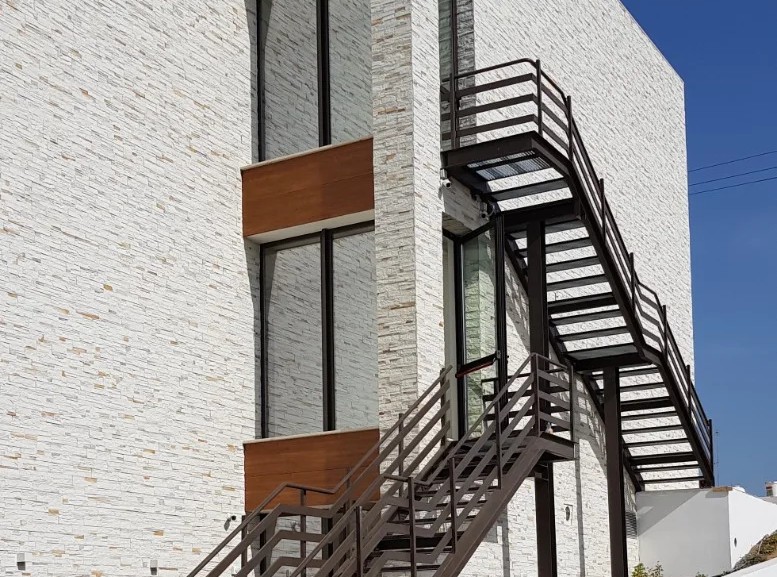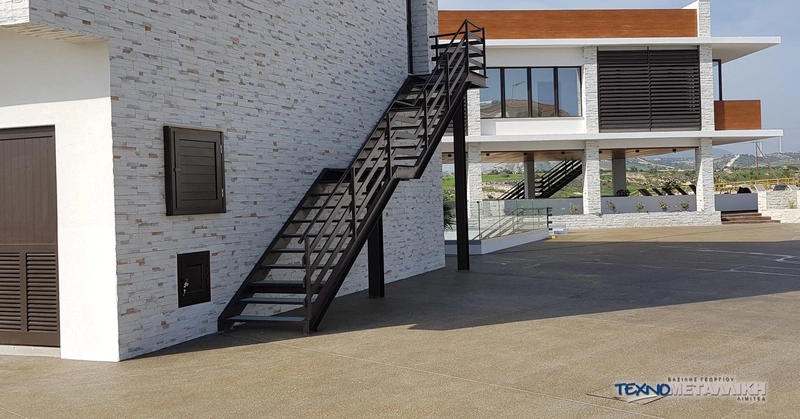
An outdoor staircase that works well inland may need a different specification a few kilometres from the Cyprus coast.
The reason is simple. Exterior steel has to cope with heat, winter rain, dust and moisture, while properties closer to the sea also face airborne salt. The material matters, but so do the finish, fixings, drainage and small construction details that determine whether water and salt are allowed to sit on the structure.
A properly specified outdoor metal staircases in Cyprus can be used for homes, apartment buildings, roof terraces, gardens and commercial properties. The sensible starting point is the site itself, not a preferred finish or staircase style.
What Makes Outdoor Staircases in Cyprus Different?
Cyprus gives exterior metalwork a particular mix of conditions.
Long periods of strong sun are followed by wetter winter weather. On coastal properties, salt carried in the air adds another consideration. A staircase in a sheltered inland courtyard is therefore not exposed in the same way as one on an open terrace near the sea.
Water also needs somewhere to go. Flat surfaces, enclosed details and areas where debris collects can hold moisture for longer than exposed sections that drain and dry naturally.
That is why an outdoor staircase needs to be designed as an exterior structure from the beginning. Steel selection, corrosion protection, tread construction, fixings and drainage are connected decisions rather than separate finishing choices.
Which Metal is Best for an Outdoor Staircase in Cyprus?
1. Galvanised Steel
Hot-dip galvanising covers fabricated steel with zinc, providing corrosion protection for exterior structures.
The American Galvanizers Association specifically discusses hot-dip galvanised steel in coastal environments and notes that exposure changes significantly with proximity to the shoreline, wind and direct sea spray. It also recommends assessing the individual microenvironment rather than treating every coastal site in the same way.
2. Stainless Steel
Stainless steel is frequently considered for handrails, fixings and exposed architectural elements, but the word “stainless” on its own tells you very little about suitability.
World Stainless lists AISI 316 and 316L stainless steels among the grades suitable for land-based coastal applications such as handrails and ladders. It also makes an important distinction: those grades are not recommended for permanent immersion in seawater.
For a staircase, grade and actual exposure therefore matter more than simply specifying “stainless steel.”
3. Powder Coating
Powder coating gives steel a clean, coloured finish and can form part of an exterior protection system. But colour should not drive the specification.
On an exposed staircase, preparation of the underlying steel and the complete corrosion-protection system need to suit the location. For harsher coastal exposure, the American Galvanizers Association identifies duplex systems, using paint or powder coating over galvanising, as one option that may extend protection.
Don’t Overlook Staircase Safety and Design
Corrosion resistance does not make a staircase suitable on its own.
Outdoor treads need appropriate grip when wet. Rainwater should drain rather than remain on the walking surface. Handrails and guarding need to suit the stair and its users, while the rise, going and overall layout affect how comfortable the staircase feels in daily use.
A secondary stair leading to a roof terrace, for example, is a different design problem from the main external access to an upper-floor apartment.
Regular cleaning and checking the finish can help outdoor stairs last longer, especially near the coast, where salt and trapped moisture can speed up corrosion. The same applies when choosing low-maintenance metal staircases, since drainage, coatings and access for routine checks all affect long-term upkeep.
How Does Outdoor Staircase Installation Work?
Good staircase installations in Cyprus begin with measurements and site conditions, not fabrication.
The usual sequence is site assessment, measurement, staircase layout, material and finish selection, workshop fabrication, finishing, delivery and installation. Access to the property matters too. A staircase being added beside an existing house may need to be fabricated and transported differently from one installed during a new build.
Structural support and connections also need to be established before manufacture rather than resolved when the staircase reaches site.
Which Outdoor Metal Staircase is Right for Your Property?
The answer changes with the job.
- For a garden or terrace, appearance and comfortable access may carry more weight.
- Apartment stairs are likely to put more emphasis on frequent use and straightforward maintenance.
- At a coastal property, exposure moves higher up the list.
- Commercial projects may bring additional structural, access, and regulatory requirements that need project-specific professional input.
That is why staircases should be specified around the building, its location and how the stair will actually be used.
Frequently Asked Questions
- Are metal staircases suitable for outdoor use in Cyprus?
Yes, provided they are designed for exterior conditions. The steel, corrosion-protection system, tread design, drainage and fixings all need to suit the location. Coastal exposure deserves particular attention because airborne chlorides can increase corrosion risk.
- Is galvanised steel suitable for an external staircase near the sea?
Hot-dip galvanised steel is used in coastal environments, but its performance depends on the severity of exposure. The American Galvanizers Association recommends considering factors such as distance from the shoreline, prevailing winds and direct sea spray rather than applying one specification to every coastal site.
- Does stainless steel rust in coastal Cyprus?
Stainless steel is corrosion resistant, not corrosion-proof. World Stainless identifies 316 and 316L as suitable for a range of land-based coastal applications, but the correct grade still depends on exposure and use.
- What type of outdoor staircase works for a roof terrace?
Straight, L-shaped, spiral or another custom arrangement may be possible. The available footprint, floor-to-floor height, opening, intended use, structural support and safe access all affect the choice. A site survey is needed before deciding which layout is appropriate.
- How often should an outdoor metal staircase be maintained?
There is no single maintenance interval that applies to every staircase. Exposure, material, coating system, proximity to the sea and the condition of the finish all matter. Outdoor stairs should be inspected periodically, with salt and dirt removed and any damaged protective finish addressed before deterioration spreads.
Making the Right Choice
For an outdoor staircase in Cyprus, the useful question is not simply “steel or stainless steel?”
It is: where will the staircase sit, what will it be exposed to, how will water leave the structure, and what level of maintenance is realistic?
Those answers narrow the material and finish choices quickly. On coastal sites especially, decisions made around drainage, coatings, fixings and exposure at the design stage are much easier to deal with than corrosion problems later. Consult with the experts to get started.